
The Enforcement Directorate (ED) has attached assets worth over 581 crore belonging to Reliance Home Finance Limited (RHFL) and Reliance Commercial Finance Limited (RCFL), companies of Reliance Group Chairman Anil Ambani, as part of an ongoing investigation.
The Enforcement Directorate (ED) has attached fresh assets worth over 581 crore belonging to Reliance Group companies, RHFL and RCFL, as part of its ongoing money laundering investigation.

Even if there is an early agreement on a cessation of hostilities in West Asia, the price shock will not go away easily, points out A K Bhattacharya.

India's privatisation push, once projected as a cornerstone of economic reform, has suffered another setback, with the Centre set to call off the IDBI Bank stake sale, highlighting the political and structural constraints shaping the country's disinvestment policy, experts say.

What is the reason behind this drying up of talent for the top post in private banks?

'People become guided by emotions, fear of missing out, and greed. They tend to invest in booming sectors that may prove exceptionally expensive.' 'Typically, that represents the peak, and subsequently, they lose substantially.'

Budget 2026 sticks to fiscal discipline, shuns populist measures despite five key state elections coming up, but ends up rattling stock markets with a higher transaction tax on derivatives trading.

Finance Minister Nirmala Sitharaman on Sunday announced an increase in the Securities Transaction Tax (STT) on Futures and Options trade with a view to discouraging small investors from speculative trading in derivatives, which led to a sharp decline in the stock market.

The Income Tax Department has clarified that income from the transfer of investments made before April 1, 2017, is excluded from the scope of the General Anti-Avoidance Rules (GAAR), addressing industry concerns about retrospective application.

'Earnings growth will be the main driver of India's market in 2026, with profits expected to rise 9% to 10% in H2 FY26 and accelerate to 12% to 15% in FY27.'

After years of rapid expansion, the Centre's capital spending growth eases as private investment shows early signs of revival, points out A K Bhattacharya.

Investors and startup executives are calling for extending the period for an entity to be recognised as a startup from 10 to 15 years for deep-tech companies.

Nearly two-thirds of external commercial borrowings (ECBs) raised so far in the ongoing financial year (2025-26/FY26) have been routed through Gujarat International Finance Tec-City (GIFT City), a sharp jump from the 36 per cent recorded in 2024-25.

'Uncertainty level A in the morning, uncertainty level B in the afternoon. If I answer about tariff rates now, I'll be outdated by the evening.'

'They are a poor fit for anyone with near-term goals, low volatility tolerance, or a need for steady income or liquidity.' 'First-time investors should typically avoid them.'

The Union Budget for 2026-27, presented by Finance Minister (FM) Nirmala Sitharaman on Sunday, which was a first, had an excellent domestic macro backdrop. According to the first advance estimates, gross domestic product (GDP) in constant prices is projected to grow 7.4 per cent in the current financial year, against 6.5 per cent in 2024-25.

Canadian firm Manulife and Mahindra & Mahindra (M&M), an Indian automaker with interests in financial services, have signed an agreement to form a 50:50 life insurance joint venture (JV) with a total capital commitment of up to Rs 3,600 crore each totalling Rs 7,200 crore.

The idea of back-loading the target of fiscal consolidation is perhaps guided by the government's desire to be prepared for any adverse developments in the coming year, points out A K Bhattacharya.

I am inclined to believe that the Venezuela adventure is not an indication of American strength, alas, but rather of American weakness, points out Rajeev Srinivasan.

The court is hearing appeals against a CCI order imposing a penalty on Meta and WhatsApp.

India is growing fast, but to keep growing strong, the government must make more things at home, create jobs, and spend money wisely, suggests Rajiv Memani, regional managing partner, Africa-India Region, EY.

With a major network rollout on the cards, the government is not keen to change the pattern of tower monetisation for Bharat Sanchar Nigam Ltd (BSNL), officials at the state-owned telecom-service provider said. The monetisation target in the telecom sector had to be revised owing to a change in BSNL's approach to mobile-phone tower monetisation, which had shifted from a sale-based model to a lease-based one.

'...not merely in managing fiscal mathematics, but in demonstrating conservatism and prudence within that framework.' 'Looking forward, we believe sufficient growth drivers exist -- ranging from government reforms to revival in consumption to favourable monsoons. Numerous factors support the Indian economy.'

Fuelled by rising disposable incomes and growing awareness about disciplined investing, monthly SIP inflows across the mutual fund industry could scale up to Rs 40,000 crore over the next 18-?24 months, according to Madhu Nair, CEO of Union Asset Management Company (AMC). SIP inflows stood at Rs 25,925 crore in March, although the industry has witnessed a declining trend over the past four months amid heightened market volatility triggered by frequent US tariff changes.

Batting for further consolidation in public sector banking, the executives of top public sector banks (PSBs) said there should be at least two Indian banking entities among the top 20 global banks.

The Rs 84,000 crore domestic fund of funds (FoFs) space, which was in the doldrums over the past 18 months, has now caught the attention of investors due to a change in the tax structure in Budget 2024. The broader category, which includes offerings across equity, debt and commodities, has seen a spike in the inflows over the past two months. FoFs typically deploy the pooled capital in one or multiple MF schemes rather than investing directly into equities, debt or commodities.

But selectively, with regulatory scrutiny and special approval, points out Tamal Bandyopadhyay.

Some of the key names include: Maruti, M&M, Ashok Leyland, Britannia, Ultratech, JK Cement, Havells, Voltas, Amber, Metro, Trent, LemonTree, Indian Hotels, Niva Bupa, HDFC Life, IGL, Acme Solar, Suzlon, Swiggy, Delhivery, ICICI Bank, HDFC Bank, Bajaj Finance, Shriram Finance," according to a report by Motilal Oswal Financial Services.

India's brittle energy security is inextricably linked to two opposing paradigms - fossil fuels, and the transition to green energy. The first powers the present; the second paves the way for Viksit Bharat in 2047.

Invest in these funds through the SIP route with at least a seven-year horizon.

There is a need for real-time or near real-time credit reporting, instead of the current fortnightly system, to improve underwriting precision, enable timely reflection of borrower actions such as loan closures or repayments, and deliver a superior consumer experience, Deputy Governor of the Reserve Bank of India (RBI), M Rajeshwar Rao said on Wednesday.

Mahindra MF, which began operations in July 2016, is currently a bit-player and placed 31 among 42 fund houses, with assets under management of about Rs 4000 crore
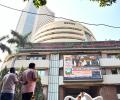
'BSE has facilitated nearly Rs 35 trillion in capital raising across multiple segments.'

India witnessed a record-breaking surge in deal activity in February, with 226 M&A and private equity deals totaling $7.2 billion -- the highest monthly deal volume in the last three years, according to the Dealtracker report of Grant Thornton Bharat. "This represents a 67 per cent increase in volumes and a 5.4-fold increase in values compared to February 2024, while a 14 per cent increase over the previous month," it said.

The Indian government has appointed Finance Secretary Tuhin Kanta Pandey as the new chairman of the Securities and Exchange Board of India (SEBI). Pandey, a 1987-batch IAS officer, will replace Madhabi Puri Buch, whose three-year tenure ends on February 28. Pandey's appointment comes at a time when the markets are experiencing bear pressure due to withdrawals by foreign institutional investors (FIIs). Pandey has extensive experience in the finance ministry, having served as the longest-serving secretary in the Department of Investment and Public Asset Management (DIPAM) and the Department of Public Enterprises (DPE). He also played a key role in the framing of the 2025-26 Budget and the drafting of the new Income Tax Bill. Pandey's appointment is for an initial period of three years.

Seasoned bureaucrat and a stickler for rules Finance Secretary Tuhin Kanta Pandey will be at the helm of capital market regulator, Securities and Exchange Board of India (SEBI), for three years. The 1987-batch Odisha-cadre Indian Administrative Service (IAS) officer, Pandey, would replace Madhabi Puri Buch, whose three-year term ends on Friday.

The definition will be revised by raising capital base to Rs 2 crore from the current limit of Rs 50 lakh.

'By investing in a basket of funds, FoFs can help minimise the impact of underperforming funds, thus reducing overall investment risk.'

Among the Sensex firms, ITC, Kotak Mahindra Bank, ICICI Bank, Nestle, Axis Bank, IndusInd Bank, UltraTech Cement, Bajaj Finance, Maruti and HDFC Bank were the major laggards.

The bank expects Securities and Exchange Board of India approval for its proposed asset management company in the next few days, Raman said, adding once the approval is secured, the bank expects to start operations of the AMC in a couple of months.
 © 2026 Rediff.com - Advertise with us - Disclaimer - Privacy Policy - Sitemap - Feedback - About us - Terms of use - Grievances